In 1912, on a warm spring day in Great Falls, Montana, Charles Russell experienced a moment of crisis. According to the author Frank Bird Linderman, who was present at the scene, Russell had been painting quietly for several hours in his log cabin studio (fig. 1.1), working on a commission for the Montana Legislature. After a time, the two men heard a noise from outside: the clanging blows of a laborer’s pickaxe. With this, Russell stopped painting. “Things ain’t fair by a damn sight,” he muttered, rolling a cigarette. “That poor devil out there in the hot sun with the sweat runnin’ down his back can’t save as much as I’m gettin’ for this picture in his whole lifetime.” Mulling over this inequity, Russell reflected on his own work: “Here I am sittin’ in the shade with an electric fan blowin’ on my neck gettin’ five thousand dollars for this thing. An’ I didn’t make the canvas, an’ I didn’t make the paint, an’ I didn’t make the brushes. I didn’t make a damn thing I’m usin’ to make that money with. I just bought ’em with money I made by usin’ stuff that other men made for wages—an’ damn poor wages, too.” He became increasingly upset. “By God,” he exclaimed, “that man out there ought to hate me. I wouldn’t blame him a damn bit if he walked in here an’ killed me with his pick.” Troubled, he sat silently. Eventually, his mood softened. “But I plumb had to paint,” he mused. “I’d have been dead long ago if I couldn’t have painted. An’ that’s sure as hell.” He then began to relax, and a moment later, he returned to work.1
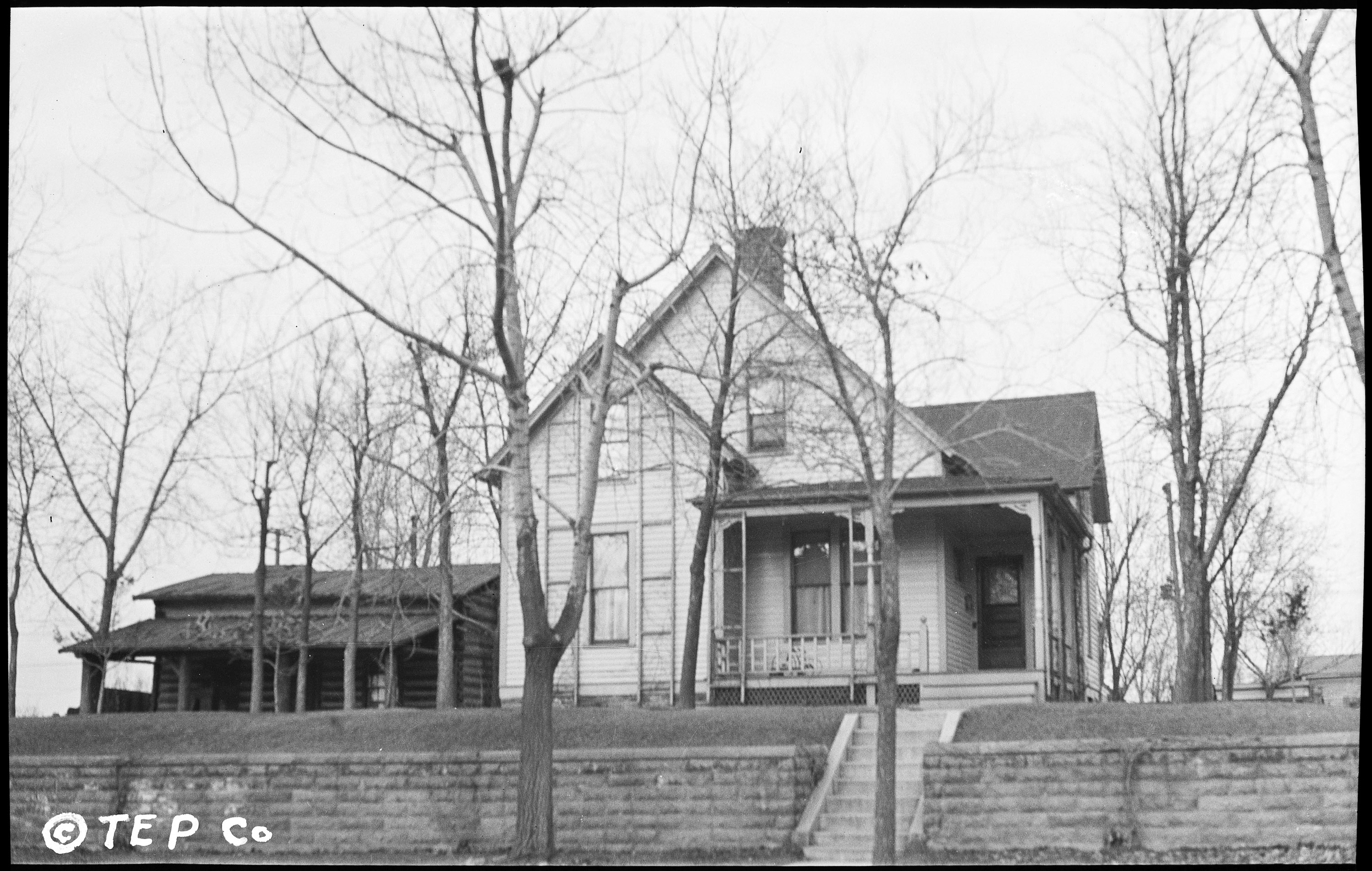
Linderman’s account offers a striking picture of Russell as he navigates a crisis of conscience. Few of Russell’s contemporaries ever commented on the wages of those who made art supplies, so his remarks on the topic are compelling. But Russell does not pursue this point any further; instead, he retreats inward, searching for an explanation that will alleviate his discomfort. Even though Linderman highlights Russell’s sympathy toward wage laborers, inequality isn’t really the point; the purpose of his story is to remind readers of the salvational importance of Russell’s creativity. Russell had an innate need to make art. He had to paint. Without art, he would have fallen prey to his own demons “sure as hell.” Read in this light, Linderman’s account harbors an argument for how to properly interpret Russell: To truly understand Russell’s art and how it was made, one must understand what art meant to Russell. If his commercial art supplies, his custom-built log-cabin studio, or the high prices that he obtained for his pictures invite fraught comparisons to certain forms of underpaid labor, Linderman suggests that we should not make much of this, because the artist’s motivations are pure. Indeed, the laborer and his pickaxe are never mentioned again, and the story ends with Russell jokingly inviting his friend to finish the foreground of his picture. “Here,” he tells Linderman, “grab a brush an’ help me make this hay.”2
I have to admit, I find stories like this unsatisfying. To be clear, I am not trying to imply that Russell should be viewed as a hypocrite just because he used certain types of art supplies or because he experienced commercial success. Nor am I interested in dismissing Russell as insincere in his moral commitments or in framing Linderman, one of the more insightful chroniclers of Russell’s life, as a poor judge of his friend’s character. I simply want to call attention to the interpretive maneuver that is taking place here, and to reflect on its implications. Creative intentions and inner motivations can be useful forms of historical evidence (to the extent that they can ever be truthfully reconstructed), and art clearly meant a great deal to Russell. But interpretations that focus only on these points can also function as an interpretive detour, as a means of avoiding a direct confrontation with the complex, difficult, and at times painful realities contained within the historical archive. In this case, they also culminate in a frustratingly tautological reading: Russell’s art is meaningful because it was meaningful to Russell.
In its effort to valorize Russell’s creative motivations, Linderman’s tale also foreshadows a leitmotif of Russell scholarship, particularly when it comes to the artist’s nostalgic portrayals of pre-reservation Plains Native American life. Over successive generations of writing on the artist, scholars have disagreed about how to best approach these works. This debate is too expansive to summarize here in depth, but one recurring thread stands out: While some have pointed to Russell’s use of crude racial stereotypes in his work as evidence of his “patronizing contempt” for Indigenous peoples and “smug sense of superiority” toward minorities, a counter-reading has emerged that works to position Russell in a more positive light.3 This reading centers on Russell’s sincerity; on his apparent admiration, respect, and sympathy for dispossessed Native Americans; and on certain public remarks, personal anecdotes, and statements made in private correspondence. Read in this light, Russell’s artworks are interpreted as subversions of harmful period stereotypes, or at least complications of them, with some even proposing that his paintings actually portray the West from an identifiably Native American point of view.4 While this framework still leaves some room to acknowledge the presence of negative stereotypes and cultural misrepresentations in Russell’s art, often with the exculpatory rationale that Russell was a “man of his times,” it considers these elements secondary to Russell’s own positive feelings about Native peoples.5 In other words, what matters is that Russell cared deeply about Native Americans, and any interpretation of his art should keep this point in sight, even when confronted with overtly stereotyped imagery. In fact, some have gone so far as to suggest that the problem is not with Russell but with present-day audiences who are too easily offended to appreciate his views, a provocative claim that shows how culture-war grievances can inform this discussion.6
However, interpretations that give such outsize weight to Russell’s alleged intentions fail to encompass the full complexity of his relationships and encounters with Native peoples, the evolution of these relationships over time, or the ways that he chose to characterize these relationships in his art. Over the course of his career, Russell refined a popular persona as a plainspoken, rough-and-tumble cowboy, someone who had rejected the comforts of upper-class urban society to pursue a lost era of open-range ranching and pre-reservation life. In the course of this self-fashioning, Russell sought to associate himself with Plains Native American cultures. Through letters, public performances, press interviews, storytelling, and even sign language, he presented himself as someone who had been granted privileged access to Montana’s Indigenous communities, particularly those that retained a strong generational connection to pre-reservation life. As one New York journalist put it, Russell “lived among Indians until they have looked upon him as a ‘white brother,’ and to him they have told many of their stories and legends, which the tourist might in vain attempt to gather.”7
The problem, though, is that much of what Russell said about his early encounters with Plains Native Americans was not actually true. He frequently claimed that he had wintered with the Kainai tribe in Alberta in 1888, and that he had been invited to marry into the community.8 However, Phil Weinard, Russell’s traveling companion during the Alberta trip, maintained that the artist had made up the tale, and historian Hugh Dempsey subsequently pointed out that the tribal members whom Russell named as friends, particularly Medicine Whip and Sleeping Thunder, are absent from tribal rolls and oral histories.9 Put simply, Russell’s story is fiction. He exaggerated and embellished his biography to bolster his credibility as a witness of Indigenous life, and he went so far as to invent characters who aligned with this narrative.
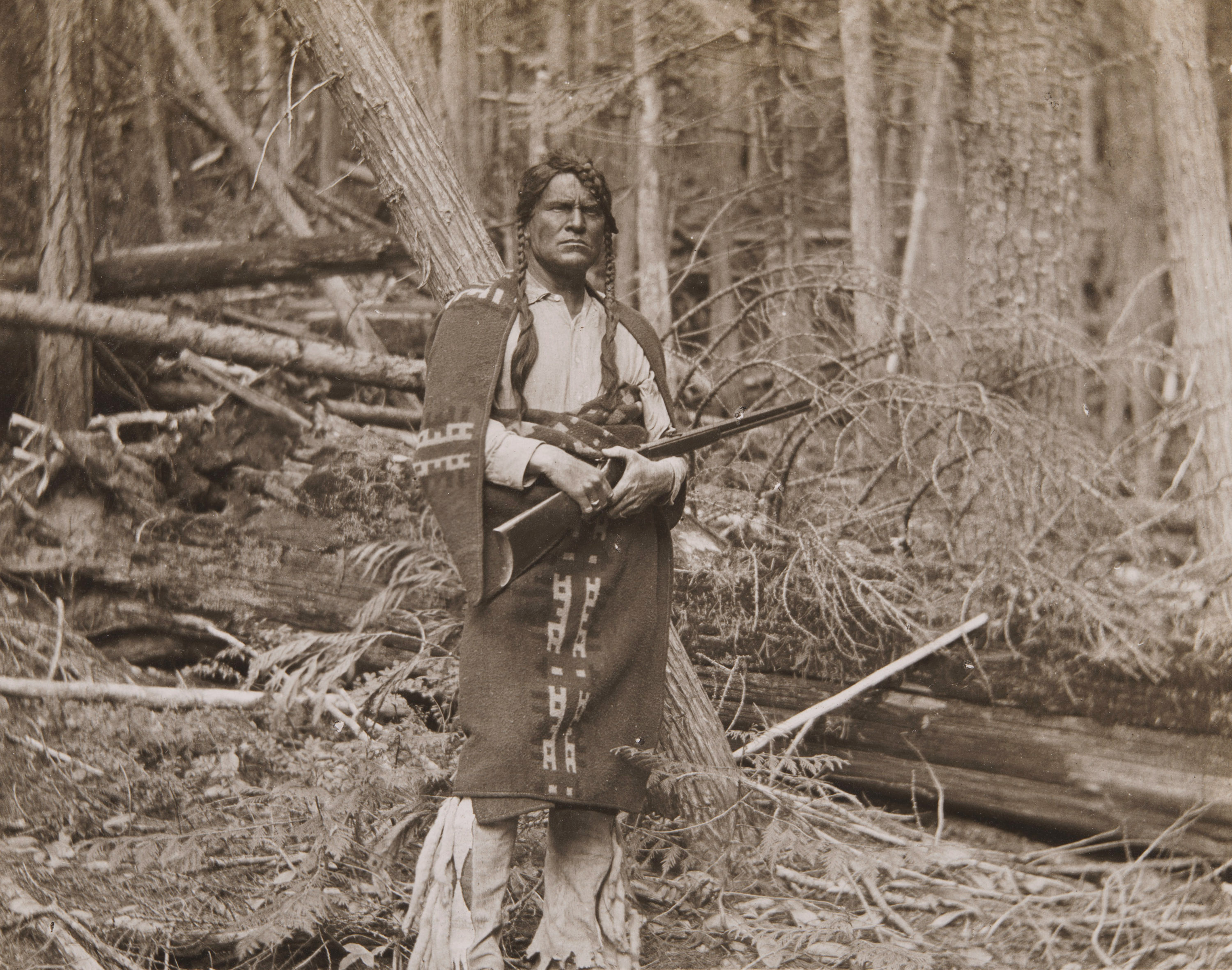
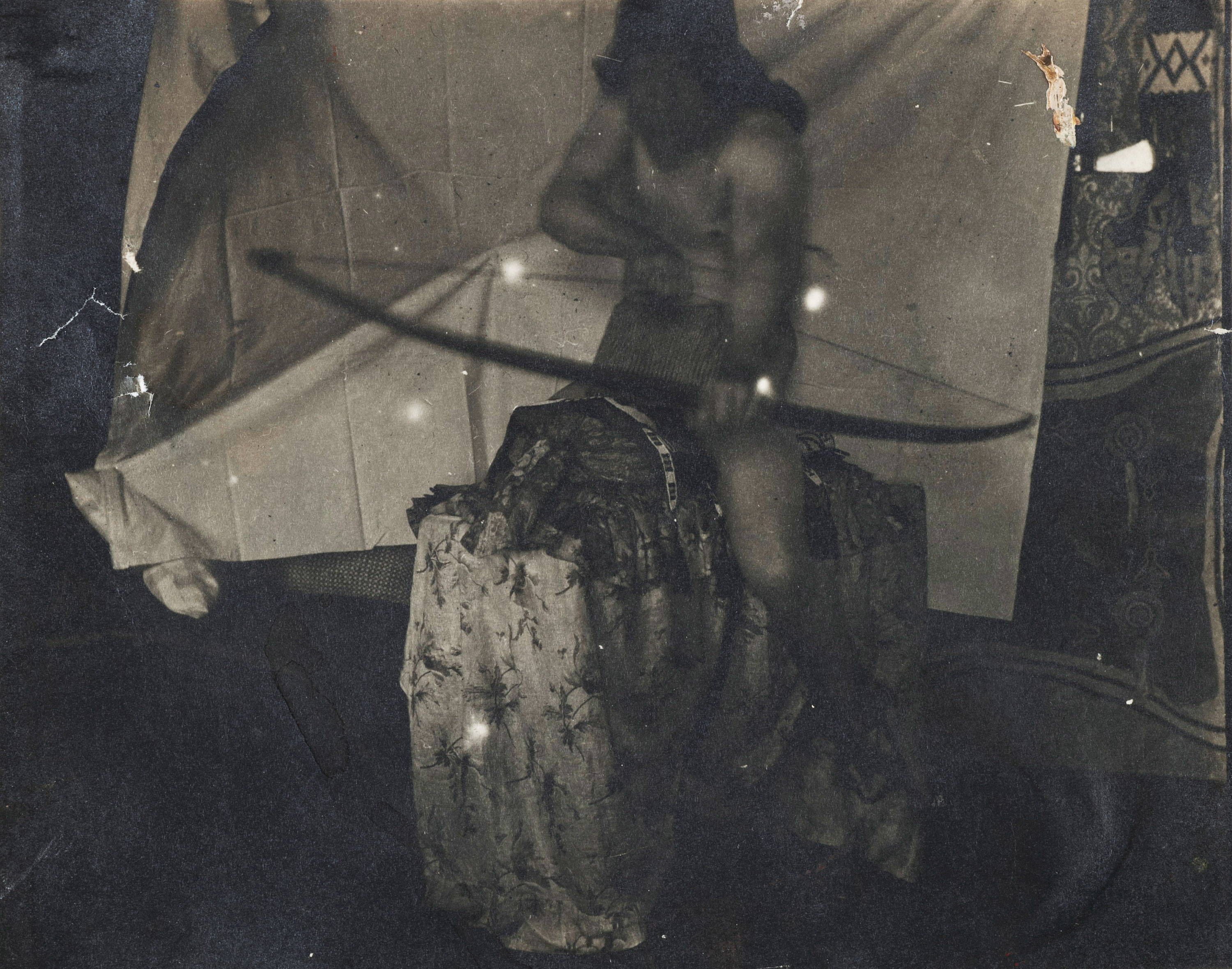
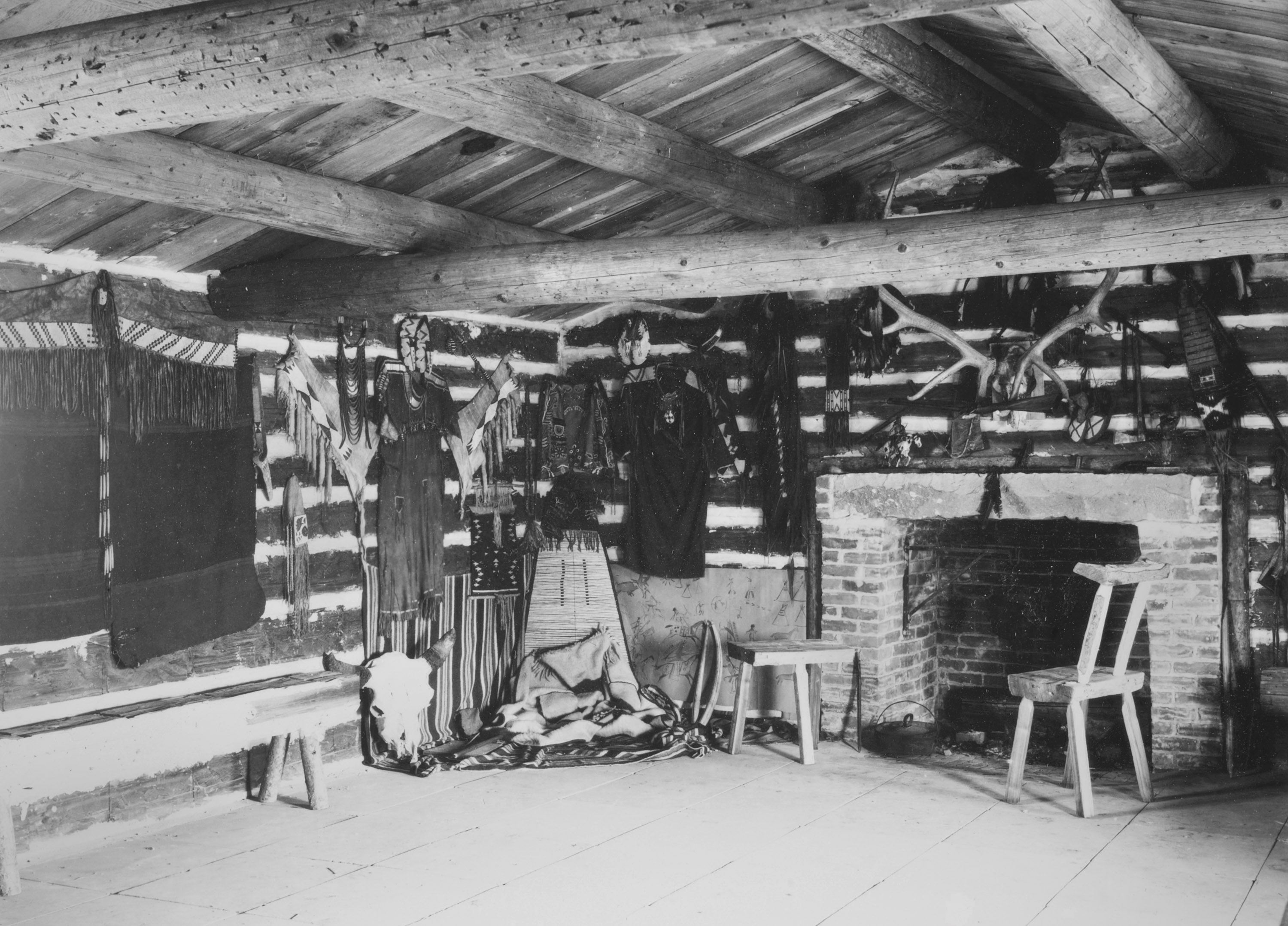
Compounding matters, Russell freely appropriated Indigenous art and material culture. Through trade and gifts, he amassed a sizable collection of reservation-era Plains art, clothing, and regalia, which he displayed in his Great Falls studio and frequently used as props when painting. Family snapshots indicate that Russell regularly wore these garments and posed and performed in redface, often with friends and family (fig. 1.2). In addition to “playing Indian,” as this practice has come to be known, he created facsimiles of Native American artworks, gave friends faux-Indian names, and wrote correspondence using a stereotyped vernacular.10 In turn, his finished paintings and sculptures often portray Native-made items in historically anachronistic and culturally misrepresentative settings, such as including items that were created on reservations in pre-reservation scenes, or presenting ceremonial items in ways that deviate from their culturally specific functions. On occasion, he also posed as an Indian in photographic studies for his own pictures, raising the question of whether his depictions of Native people involved an exoticizing form of projective self-portraiture (fig. 1.3). Is it really enough to contextualize these actions merely as well-intentioned expressions of sincere cultural appreciation? Russell biographer John Taliaferro offers a more cautioned reading, concluding that “grown men who darkened their faces, dressed up like braves, and struck cigar-store poses, as Charlie did regularly . . . were paying tribute more to the tradition of the Anglo-Saxon house party than that of a dignified and complex indigenous people.”11 As Taliaferro’s reading suggests, even if Russell did mean well, this still seems an unsatisfying conclusion to repeatedly try to end on, and it may well be a painful one for many. The pictures still exist, after all, and they continue to occupy pride of place within museums, regardless of whether they offer a truthful accounting of the communities and cultures that they claim to represent.
Efforts to divine Russell’s intentions also risk overlooking the significance of Russell’s Native interlocutors as well as the visual and material cultures that they created. The Indigenous items that Russell collected, repurposed, represented, and misrepresented in his art are components of a rich and complex social life in reservation-era Montana. When Russell donned regalia from his collection or used a Native item as a prop for a painting, he was using something made by someone else, someone with their own inherited cultural traditions, their own creative agency, and their own sense of that object’s purpose and significance. Yet the histories of these makers and their creations—their origins, their meanings, and the ways in which they circulated within turn-of-the-century Montana—have received comparatively little attention within scholarship on the artist, save for observations about tribal attribution and cultural function sourced primarily from mid-twentieth-century Euro-American ethnographic literature. This is a missed opportunity.
Broadly construed, the Indigenous belongings that Russell collected and incorporated into his paintings evidence efforts by A’aninin (Gros Ventre), Apsáalooke (Crow), Nakoda (Assiniboine), Piikani (Blackfeet), Métis, and other Plains communities to maintain cultural continuity in the face of state-sanctioned dispossession, unequal markets, forced confinement, and frequently violent attempts at assimilation. They also evidence some of the strategies, both visual and commercial, that Indigenous makers used to represent themselves and their communities to curious outsiders such as Russell.12 Might Russell’s artworks retain recognizable traces of these strategies, even in the instances when he, whether knowingly or not, portrayed Indigenous life in culturally misrepresentative ways? In turn, might his works serve as a useful resource for recovering fragments of the lives, perspectives, and experiences of his Native counterparts who had been displaced and confined to reservations? In other words, can we read Russell’s art in such a way that it enriches our understanding of the broader cross-cultural landscape of reservation-era Montana, as well as Russell’s own place within it? Such questions are at the heart of this volume.
Carter Bulletin
In this inaugural issue of the Carter Bulletin, which represents a new publication initiative dedicated to advancing scholarship on the Carter’s collection, four short essays as well as a serial cartoon offer a new assessment of Russell’s life and work. Specifically, this project reframes Russell’s creative practice as an attempt to craft a nostalgic, celebratory vision of the Old West from sources that evidence Indigenous efforts to navigate the harsh realities of Montana’s colonization. In developing this framework, the essays that follow consider a range of topics, including Russell’s collection of Indigenous art and material culture, his fascination with reservation-era beadwork, his portrayals of Plains Indian Sign Language, and his ambivalence toward the domestication of wildlife. Much like the aforementioned laborer’s pickaxe, these subjects announce themselves in unexpected, sometimes jarring ways. They interrupt established narratives, prompting critical reflection on the mythologies and assumptions that burnish Russell’s legacy. Yet in doing so, they make a case for the continued relevance of Russell’s art as an object of study and appreciation.
The opening essay in this volume, by Dr. Annika K. Johnson, Stacy and Bruce Simon Curator of Native American Art at the Joslyn Art Museum in Omaha, Nebraska, introduces this new lens by considering Russell’s personal collection of Indigenous art and material culture, which he acquired over several decades and kept in his studio in Great Falls (fig. 1.4).13 This collection, she stresses, sheds important light on how Russell’s Indigenous counterparts chose to engage with the artist. Through a focused discussion of several belongings—including a capote presented to Russell by Buffalo Coat, a nêhiyaw (Cree) man who often visited Russell in Great Falls, and a shirt and leggings given to the artist by Big Bear, an A’aninin man at Fort Belknap—Johnson underscores how Native values of reciprocity and gift giving informed Russell’s access to Native-made goods, though not necessarily how he chose to use or portray them. In developing her insights, Johnson also attends to notable gaps in Russell’s collection, namely the absence of ceremonial belongings associated with manhood and warfare, which were typically not made available to outsiders via trade or gift giving. Russell was fascinated with such items, so he manufactured his own facsimiles as substitutes, including a fur-and-wool-wrapped wooden staff resembling a coup stick. In charting the paths that various belongings took on their way to Russell’s possession, Johnson’s essay reveals an instructive tension between how Russell chose to portray Native material cultures in his paintings and how he actually encountered and engaged with such items during the reservation era.
The subsequent essay, by Dr. Emily C. Burns, Charles Marion Russell Chair at the University of Oklahoma, continues this focus on Russell’s collection. Burns centers on the Blackfeet dress that Russell portrayed in his well-known watercolor Sun Worship in Montana. She reminds us that the meaning of this dress, which was sourced from Russell’s studio collection, is not limited to Russell’s interest in the garment, his knowledge of it, or the ways that he incorporated it into his art. Rather, a substantive understanding of the dress must center on its significance within Blackfeet culture. Blackfeet concepts of relationality and reciprocity are inextricable components of the dress’s form, materiality, and circulation, even when such concepts are distorted, suppressed, or marginalized by Euro-American modes of collecting and representation. In the course of her analysis, Burns calls attention to scholarly neglect of Josephine Wright, a Blackfeet woman who befriended the Russell family, worked for them, and posed for a number of Russell’s paintings. She highlights Wright’s significant role in shaping the artist’s access to and knowledge of Blackfeet cultural traditions. Building on this discussion, she highlights certain unacknowledged affinities between Russell’s pictorial style and the forms and patterns created by Native women makers, particularly beaders. She suggests that Russell may have drawn inspiration from Indigenous traditions of abstraction even as he disparaged emerging trends in European abstract art. Through her analysis of the manifold meanings contained within the dress, Burns emphasizes aspects of Russell’s life and art that resist, counter, or disrupt his efforts to appropriate Indigenous objects and cultural traditions for his own ends, and she encourages other scholars to do the same.
The third essay, by Dr. Melanie McKay-Cody, Assistant Professor in the Department of Disability and Psychoeducational Studies at the University of Arizona, pivots from a consideration of material culture to a discussion of language. In his art, Russell frequently portrayed figures using Plains Indian Sign Language (PISL), but he was attentive to the limits of painting and sculpture as a medium for portraying PISL signs.14 In a letter to William Tomkins, an early twentieth-century ethnographer and the author of Universal Indian Sign Language of the Plains Indians of North America (1926), Russell wrote: “I have tryed [sic] sometimes in my pictures to make Indians talk sign but it is hard to make signs with out motion.”15 With such limits in mind, McKay-Cody considers Russell’s portrayals of individual signs as well as their contextual usage. She notes that Russell’s pictures are limited in their ability to capture the nuances of individual signs as well as the linguistic diversity of PISL within Plains communities. Nonetheless, Russell’s work stands out within the genre of western American art for its attentiveness to the rich and diverse social life of sign language across the Native cultures of the Plains, including not only contexts of trade, warfare, and hunting but also cross-cultural communication and intergenerational storytelling.
The closing essay, by Dr. Michael D. Wise, Professor of History at the University of North Texas, examines Russell’s place in early twentieth-century Montana through the lens of his anti-modern sentiments. Russell, as is widely known, had little affection for industrialized and urbanized modernity. He preferred forms of experience that retained a direct connection to the open range. He disliked the crowds, noise, and density of cities, lamented new forms of communication technology (with the exception of Hollywood films), and disdained automobiles.16 Wise revisits Russell’s anti-modern views, correlating them with an emerging technological transformation in U.S. society: the shift from equestrian “muscle power” to automotive power driven by fossil fuels.17 Wise proposes that Russell’s artworks valorize muscle power as a reassertion of a heroic, muscular vision of human-animal relationships, one in which masculinity is premised on a physical, often violent struggle for dominance and mastery of nature. This worldview, Wise notes, also included a pronounced distaste for pets and petkeeping, a form of relationality that short-circuited Russell’s conception of manliness and self-sufficiency. By revisiting the role of human-animal encounters in Russell’s art, Wise’s essay invites us to revisit the broader technological and industrial transformations underway in turn-of-the-century Montana. Not only did such transformations dramatically reorganize human-nonhuman relationships, particularly in ways that worked to suppress Indigenous ways of living alongside animals, they also complicated Russell’s own conception of how colonized lands should be enjoyed and appreciated.
Russell’s legacy stems in large part from his renowned skills as a storyteller. Not only did he craft dramatic portrayals of the Old West in oil, watercolor, and bronze, but he was also accomplished in prose and in illustration. In recognition of Russell’s multimedia sensibility, this inaugural issue of the Carter Bulletin is illustrated with a serial cartoon by Philadelphia artist Ian Sampson. Over the course of the volume, Sampson takes readers on a journey through Russell’s art led by Rawhide Rawlins, one of Russell’s best-known protagonists from his prose fiction. In a tale reminiscent of Charles Dickens’s A Christmas Carol, Rawlins appears in Russell’s studio to converse with the artist and discuss his legacy. Placed at the start of each essay, the cartoon panels draw inspiration from the arguments and ideas of the authors, giving new dimension and depth to Russell’s engagement with histories of collecting, sign language, automobiles, and animals. Richly illustrated and thoughtfully narrated, Sampson’s cartoons offer a lively and accessible entry point into the core ideas of this volume. In turn, Sampson underscores both the complexity of Russell’s character and the challenge of distilling the artist’s persona down to a straightforward narrative of heroic intentions or, conversely, total capitulation to stereotype and trope.
Presented together in this volume, these contributions are meant to spark renewed interest in Russell’s art within art history. Rather than offering exhaustive and authoritative declarations, the authors present their findings as invitations for further inquiry. Together, they argue for the enduring relevance of Russell’s art as an object of study.
However, such work harbors within it a larger and as yet unfulfilled commitment. While I believe firmly in the continued utility and importance of Russell’s art, I have been able to study these pictures from a position of relative comfort. While at times I have struggled to relate to the boisterous world that Russell depicts, I have never felt misrepresented by it. This is a significant difference, and one that museums must grapple with if they hope to make a robust case for Russell’s enduring cultural prominence. Over successive generations, Russell scholarship has proceeded with minimal input from the Native communities whose cultures appear in his artworks, a criticism that could be directed at this volume as well. A richer, more fulsome, and more truthful understanding of Russell will require a sustained commitment to relationship building and an embrace of shared expertise and interpretive authority. As Johnson writes in her essay, “The next phase of research must adopt a more reciprocal approach. . . . This collaborative effort is vital for developing a deeper, more nuanced understanding of Russell’s legacy and ensuring that the interpretations of his work are informed by those who are most connected to the stories he depicted.” Inclusive and collaborative forms of scholarship, rooted in concerted efforts toward relationship building, will help institutions address key questions surrounding Russell’s legacy. It is our hope that this volume will contribute to further conversation on these issues.
Endnotes
-
Frank Bird Linderman, Recollections of Charley Russell, ed. H. G. Merriam (Norman: University of Oklahoma Press, 1984), 99. ↩︎
-
Linderman, Recollections of Charley Russell, 99. ↩︎
-
J. Gray Sweeney, “Racism, Nationalism, and Nostalgia,” in Race-ing Art History: Critical Readings in Race and Art History, ed. Kymberly N. Pinder (Abingdon, UK: Routledge, 2002), 160. ↩︎
-
James P. Ronda, “Charlie Russell Discovers Lewis and Clark,” in The Masterworks of Charles M. Russell: A Retrospective of Paintings and Sculpture, ed. Joan Carpenter Troccoli (Norman: University of Oklahoma Press, 2009), 197−209. Similarly, Rick Stewart asserts that “in many of his finest watercolors man and nature are inseparable within a spiritual world that—according to the Native American way of seeing—must first be ‘believed’ in order to be ‘seen.’” Rick Stewart, Charles M. Russell Watercolors, 1887−1926 (Fort Worth, TX: Amon Carter Museum of American Art, 2015), 16. ↩︎
-
Brian W. Dippie, “‘What a Pair to Draw To’: Charles M. Russell and the Art of Storytelling Art,” in Troccoli, The Masterworks of Charles M. Russell, 169. ↩︎
-
Raphael James Cristy, Charles M. Russell: The Storyteller’s Art (Albuquerque: University of New Mexico Press, 2004), 63. ↩︎
-
“Smart Set Lionizing a Cowboy Artist,” New York Press, January 31, 1904. ↩︎
-
See, for instance, “Cowboy Vividly Paints the Passing Life of the Plains,” New York Times, March 19, 1911. ↩︎
-
Hugh A. Dempsey, “Tracking C. M. Russell in Canada, 1888–1889,” Montana The Magazine of Western History 39, no. 3 (Summer 1989): 4−6. Dempsey did confirm that Russell had spent time with the family of Apskinas, a Kainai and Sarcee man who lived independently outside of the reserve, but the extent of his contacts with the Kainai in Alberta remains undocumented within Euro-American sources. ↩︎
-
For a characteristic example, see Charles M. Russell to William Crawford, in Charles M. Russell, Word Painter: Letters 1887–1926, ed. Brian W. Dippie (New York: Harry N. Abrams, 1993), 124−25. ↩︎
-
John Taliaferro, Charles M. Russell: The Life and Legend of America’s Cowboy Artist (Norman: University of Oklahoma Press, 2003), 186. Taliaferro’s assessment echoes the insights of Philip J. Deloria, who highlights how White Americans during the Gilded Age often played Indian to invent and temporarily inhabit an identity that seemed more authentic than what was available within urbanized society. Philip J. Deloria, Playing Indian (New Haven: Yale University Press, 1998). ↩︎
-
In this sense, such belongings might be characterized as a form of what Mary Louise Pratt describes as “autoethnography,” in which colonized subjects represent themselves—through art, writing, speech, or other forms of cultural communication—in ways that confront or engage with how colonizers see them. Mary Louise Pratt, Imperial Eyes: Travel Writing and Transculturation (Abingdon, UK: Routledge, 1992), 7. ↩︎
-
The collection is now housed in the C. M. Russell Museum in Great Falls, Montana. ↩︎
-
Russell’s portrayals of sign language are also discussed in detail in Mark Andrew White’s insightful essay “‘I Heap Savvy You’: Charles M. Russell, Joe De Yong, and the Pictorial Value of Hand-Talk,” in Charlie Russell and Friends (Denver: Petrie Institute of Western American Art, Denver Art Museum, 2010), 45−56. Additional useful context can be found in Brian Hochman, Savage Preservation: The Ethnographic Origins of Modern Media Technology (Minneapolis: University of Minnesota Press, 2014), 35−72; and Kay Yandell, “The Moccasin Telegraph: Sign-Talk Autobiography and Pretty-shield, Medicine Woman of the Crows,” American Literature 84, no. 3 (September 2012): 533−61. ↩︎
-
Charles Russell to William Tomkins, May 27, 1926, in Dippie, Charles M. Russell, Word Painter, 392. ↩︎
-
On Russell’s love for Hollywood, see Alexander Nemerov, “Projecting the Future: Film and Race in the Art of Charles Russell,” American Art 8, no. 1 (Winter 1994): 70−89. ↩︎
-
Elsewhere, Wise has documented how the emergence of the stock-raising industry profoundly reshaped cultural attitudes toward animals in Montana. Michael D. Wise, Producing Predators: Wolves, Work, and Conquest in the Northern Rockies (Lincoln: University of Nebraska Press, 2016). ↩︎